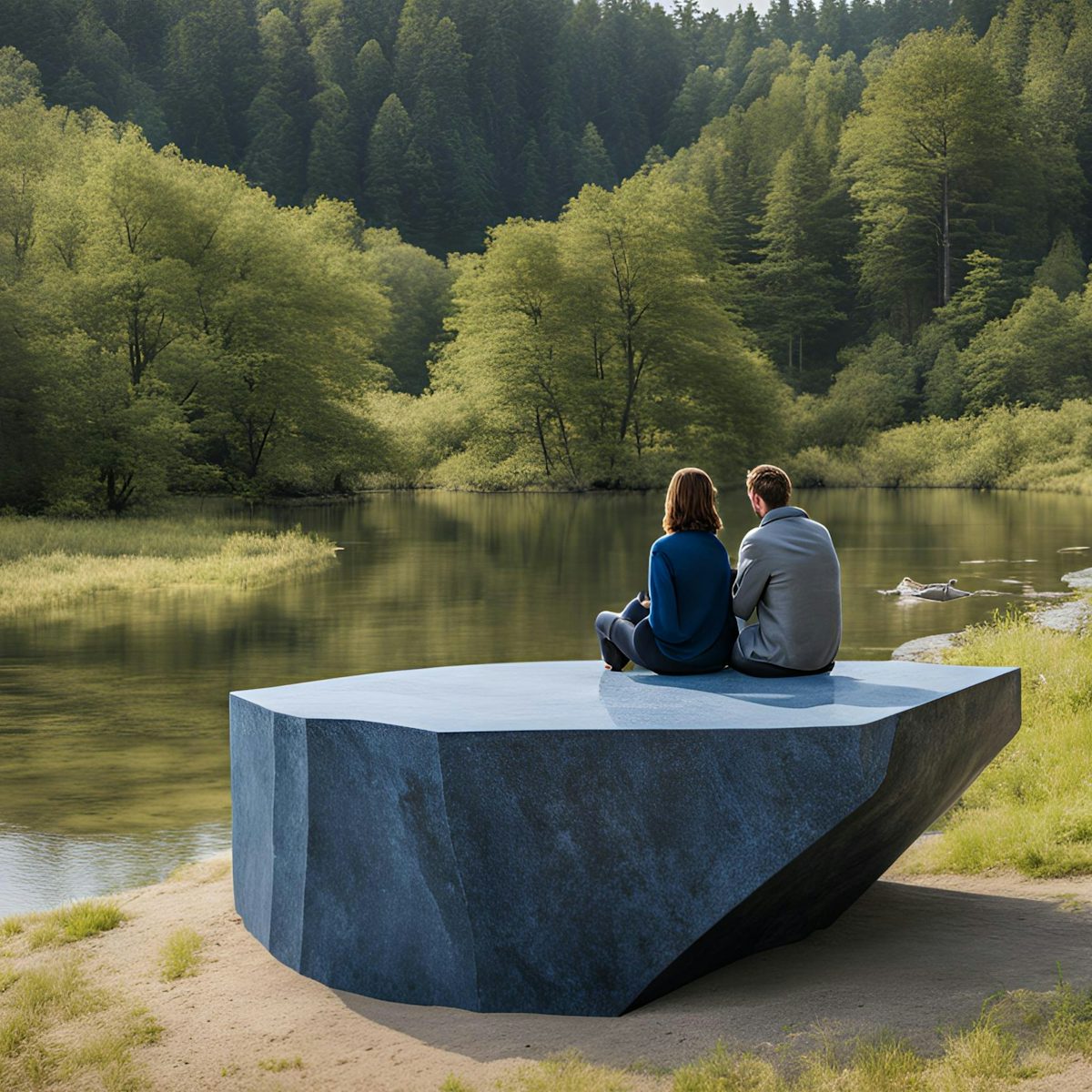
our philosophy
We wish to invite people and communities to engage in long-term thinking about the future of meaningful places.
Pae may highlight the significant stories of a place, if led by Mana Whenua, or may simply highlight a place of beauty. Each place, we hope, can foster reflection and conversation, and involve the community in creating a place for reflection.
the concept of Paererewā
Paepae, or pae, directly translates to beam, threshold or place of exchange. Most common is the pae-kōrero or orator’s bench, a threshold between the haukāinga (local people) and manuhiri (visitors). A pae can be a physical, or figurative, threshold.


Pae will mark the threshold between the present and being present. A place to disrupt the flow (rere) of life to pause and consider time and our place in it (wā). We want to create the necessary conditions for people to consider and connect with their surrounding landscape and generational time.
Paererewā will be sited across Aotearoa within public-owned urban spaces, parks, reserves, riverbanks, national parks, beaches & coastal areas. We strive to tell mark and reveal the story of the whenua (land). We invite Mana Whenua to tell their stories through the creation of a Pae and welcome the opportunity to work on this with any hapu or iwi.
Each individual site in the Paererewā network will be open to everyone. We aim to draw focus onto the local environment, highlight unique destinations and prompt dialogue around long-term thinking. The Paererewā Trust will manage an endowment fund that resources the care and maintenance of the Pae through school or community partnerships for generations to come.
The Themes of Paererewā
We embark on this aspirational project to bring together Time, People, Place and Aesthetics.


Time


Each site presents an invitation to participate in a project rooted in long-term thinking. The community that gathers around a Pae does what few communities do: consider the 1,000-year future of a place.
Each of these communities becomes part of the larger, national Paererewā community. Together they create a cross-generational vision of the place, inviting and encouraging visitors to experience this unique concept of time.
People


A Pae enables a community voice or vision to be realised in the world - and a place to sit or rest.
It’s can be a way of expressing the complex natures of a community with more than words: love and care for place; hope and fear for the future; appreciation for nature; the passage of time through seasons, years and generations; and the myriad other unique, specific ways groups of people exist together including respect for tangata whenua. And it can be quite simple, humble, in form. A place to sit or rest for the people who visit there.
Place


paererewā will commemorate the wairua (energy) of place. They offer a way to acknowledge and create places to be known and become meaningful statements of identity, history, place and community.
Pae mark and draw out the significance of a place, fostering encounters as a part of their core function.
Pae invite discourse on how people can better protect and care for place, community and environment.
Each Pae should frame the visitor’s perspective and inspire reflection, without dominating the experience.
AESTHETICS


paererewā will be interventions of beauty in the environment.
We are influenced by French art critic Nicolas Bourriaud’s concept of relational aesthetics. He saw the creators of an object or artwork not as the central focus of the intervention, but as the catalysts or facilitators for viewers to think, imagine and have a conversation.
The creators, in this sense, give audiences access to power and the means to change the world. It is receptive to multiple readings and multiple perspectives, which may of course evolve over time.
At the intersections
The Paererewā concept sits at the intersection of other forms or disciplines as well, bearing aspects of street furniture, of parks, of follies, of craft and object-making, of sculpture, of memorials – but not fitting neatly into any of those categories.
We take inspiration from all of these forms and are especially excited by projects that sit at the intersection of multiple disciplines, a place of discovery and striving.
The Paererewā project is focused on uplifting design disciplines that inform the use and meaning of objects in all aspects of daily life.
street furniture


The humble public bench was scrutinised by William H. Whyte in his 1980 study of New York’s plazas, which started a mini-revolution in urban planning and design.
Whyte studied human behaviour, and was the first to analyse what makes a public seat successful and well-used – everything from location, materials, height, width, aspect and wider context.
His work has been used to help transform public spaces around the world into vibrant community places for social life.
parks


National Parks in Aotearoa New Zealand require an Act of Parliament to disestablish them.
Where Nature Reserves are entirely focused on preservation of natural values, with entry by permit only, National Parks are preserved in perpetuity both for their intrinsic value and for public access and enjoyment.
There can be a tension between those two objectives, but they can also reinforce one another, with public access raising people’s awareness and desire to protect and preserve these special places.
follies

In landscape architecture, a folly is a small architectural structure that furnishes parks and gardens with both visual and mythological points of reference.
The folly stands out as something distinct within a larger green space but is in a direct dialogue with its physical surroundings and narrative context. Visitors to such a garden are drawn to the folly, typically visually striking and eccentric, and the folly then provides a resting point from which to experience a certain vista.
The folly acts as an attractor and then frames how and what a visitor to the garden sees and experiences.
Every folly is a piece of architecture, a sculpture, a space and sometimes includes text. They are there to please, disrupt and play with one’s experience of the surrounding landscape.
craft and design

At the intersection of creative practices that encompass diverse histories of making.
From centuries- old crafts such as carving and weaving through to design disciplines that inform the use and meaning of objects in all aspects of daily life.
Craft and design practices balance aesthetics and function, and incorporate a strong understanding of materials and their connection to the natural world.
sculpture


In her 1979 essay Sculpture in the Expanded Field, Rosalind Krauss examined how the term "sculpture" needed to be redefined as the field had expanded to encompass a vast variety of forms far beyond any historical precedents.
Krauss identified the lack of a framework for discussing minimalism, constructivism and land art that exists between categories like sculpture, architecture and landscape.
Paererewā could in part be considered as another form in the expanded field that extends well beyond the constraints implied by the term "sculpture", with aesthetic interventions in the environment that seek to frame and facilitate rather than dominate.
memorials

Paererewā has been formed through learning about memorials, which traditionally celebrated victories and glorified the conqueror. Following World War One, a number of proposals to the government asked for “useful” memorials such as libraries or clubrooms but it was only after World War Two that the government's position changed. A Government subsidy for a pound grant for every pound raised by the community was used to build the network of Memorial Halls that today combine aspects of memorial and celebration.
We greatly appreciate the work and research of Fiona Jack in her book Living Halls that explores the role and function of Memorial Halls and Bill McKay's essay on the same.
How it worksA Paererewā is something enduring, embedded in the land, to last 1,000 years, to protect and revere a sacred space for stillness, reflection and wisdom.
Share your suggestion for a Paererewā
Get in touchFollow us for latest updates
© 2026 Paererewa